
Minimally Invasive Spine Surgery Overview
Learn just what “minimally invasive” means when it comes to spine surgery:
What is Minimally Invasive Spine Surgery?
Traditional spine surgery is performed by cutting long,deep incisions through muscle, which can leave the patient with long scars and an even longer healing time. Minimally invasive spine surgery uses the least invasive techniques and minimal cutting possible to give the surgeon access to the spine. By utilizing these techniques, the surgeon cuts down on the patient’s recovery time and scarring.
There are a variety of techniques that are considered minimally invasive, so ask your surgeon what technique he will use. The most common minimally invasive approach is the use of tubular dilators to widen the opening. These tools spread the muscle apart, whereas a traditional spine surgery cuts through the muscle. The surgeon then uses special tools to work through the tubular dilators to perform the needed procedure. By using this technique, less musculature damage occurs, which results in less pain and a speedier recovery for the patient.
Benefits
Minimally invasive surgery offers many benefits to the patient that traditional spine surgery does not. Patients who undergo minimally invasive spine surgery may have a shorter recovery time due to the nature of the operation. Because the operation is performed through a small incision, blood loss, pain, and muscle damage are reduced. This means the patient is able to get back on their feet sooner, with less dependence on post-operative narcotics. Patients may have a shorter hospital stay, in some cases as short as 1-2 days. The length of your stay will be determined by your physician.
Options
Not every one is eligible for minimally invasive spine surgery. Not all spines are alike, so only your surgeon can tell if you are an eligible candidate for minimally invasive spine surgery. If certain conditions are not met, your surgeon may opt to perform your procedure with a traditional approach. Only your physician can determine if you are a candidate for minimally invasive spine surgery.
Minimally Invasive Spine Surgery Overview
Minimally invasive spine surgery (MISS) represents a major advancement in treating spinal disorders. Using smaller incisions and modern technology, surgeons can address many conditions with less pain, faster recovery, and reduced risk compared to traditional open surgery.
What Is Minimally Invasive Spine Surgery?
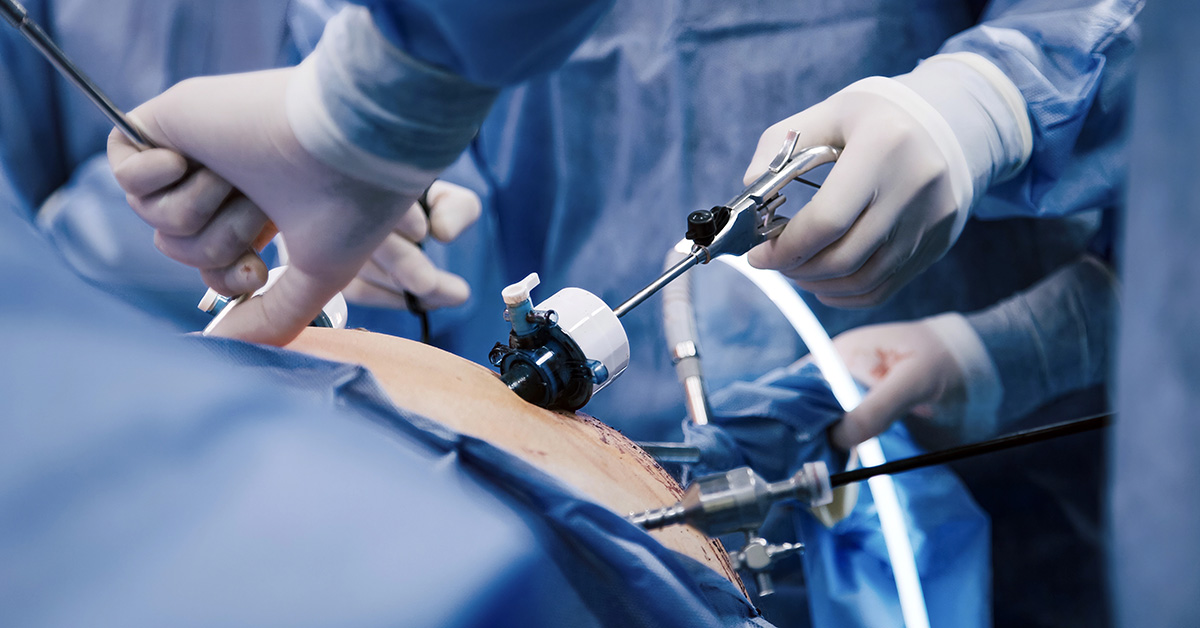
MISS involves specialized techniques and tools — including tubular retractors, endoscopes, microscopes, and intraoperative navigation — to access the spine through incisions typically less than one inch long. Rather than cutting through large muscle groups, surgeons gently spread the muscles to reach the affected area, minimizing tissue trauma.
Common Conditions Treated
Minimally invasive approaches are successfully used for:
- Herniated or bulging discs
- Spinal stenosis
- Degenerative disc disease
- Spondylolisthesis (slipped vertebra)
- Spinal instability
- Vertebral compression fractures
- Certain spinal tumors or infections
Popular Minimally Invasive Procedures
- Microdiscectomy — Removal of herniated disc material pressing on nerves
- Minimally Invasive Lumbar Fusion (such as TLIF or LLIF)
- Laminectomy/Decompression — Relieving pressure on the spinal cord or nerves
- Cervical Disc Replacement
- Kyphoplasty/Vertebroplasty — For compression fractures
Key Benefits of MISS
Patients often experience:
- Significantly smaller scars
- Less blood loss
- Reduced postoperative pain
- Shorter hospital stays (many are same-day or outpatient)
- Quicker return to normal activities
- Lower risk of infection and muscle damage
Is Minimally Invasive Spine Surgery Right for You?
While MISS offers many advantages, it is not suitable for every patient or condition. Complex spinal deformities, severe instability, or certain multi-level issues may still require traditional open techniques. A detailed evaluation with an experienced spine surgeon is the best way to determine the most appropriate approach.
Recovery Expectations
Recovery varies by procedure and individual, but most patients report faster relief and return to daily life. Physical therapy often plays an important role in long-term success.
Minimally invasive spine surgery continues to evolve, offering patients effective treatment options with improved quality of life and quicker healing times.